If your doctor has recommended low phosphorus foods, you may be wondering what you can still enjoy. While phosphorus is an essential mineral that supports healthy bones, teeth, and energy production, too much phosphorus can become a problem for people with certain medical conditions, especially chronic kidney disease.
The good news is that eating a lower-phosphorus diet doesn’t mean giving up nutritious meals. By choosing the right foods and understanding where phosphorus is commonly found, you can support your health while still enjoying a varied and satisfying diet.
What Are Low Phosphorus Foods?
Low phosphorus foods contain relatively small amounts of phosphorus per serving. These foods help reduce the amount of phosphorus entering your bloodstream, which may be helpful if your kidneys have trouble removing excess phosphorus.
Healthy kidneys naturally balance phosphorus levels. When kidney function declines, phosphorus can build up in the blood, leading to complications over time.
Many people searching for foods low in phosphorus are following advice from a healthcare provider or registered dietitian after blood tests showed elevated phosphorus levels.
Why Phosphorus Matters
Phosphorus plays several important roles in the body.
It helps:
- Build strong bones and teeth
- Support muscle function
- Produce energy
- Maintain healthy cells
- Work together with calcium and vitamin D
Although phosphorus is necessary, balance is the key.
- Weak bones
- Itchy skin
- Joint discomfort
- Calcium deposits in blood vessels
- Heart and blood vessel problems over time
Because phosphorus levels affect overall health, your healthcare provider may recommend dietary changes alongside medications if needed.
Who May Benefit From Low Phosphorus Foods?
Not everyone needs to limit phosphorus.
A lower-phosphorus eating plan is commonly recommended for:
- People with chronic kidney disease (CKD)
- Individuals receiving dialysis
- Some kidney transplant recipients
- People with persistently high blood phosphorus levels
If your kidneys are healthy, your body usually removes excess phosphorus without difficulty.
Never begin a restrictive diet unless your healthcare provider recommends it.
Low Phosphorus Foods for Kidney Patients
One of the most common reasons people search for low phosphorus foods for kidney patients is to help slow complications related to chronic kidney disease.
When kidney function decreases, phosphorus may remain in the bloodstream instead of being filtered into the urine.
Along with limiting phosphorus, many kidney patients may also need to monitor sodium, potassium, protein, or fluid intake. Dietary recommendations vary depending on your stage of kidney disease, so always follow the guidance provided by your nephrologist or dietitian.
If you’ve also been advised to watch your potassium intake, our guide on high potassium foods to avoid may help you understand which foods are commonly limited alongside phosphorus.
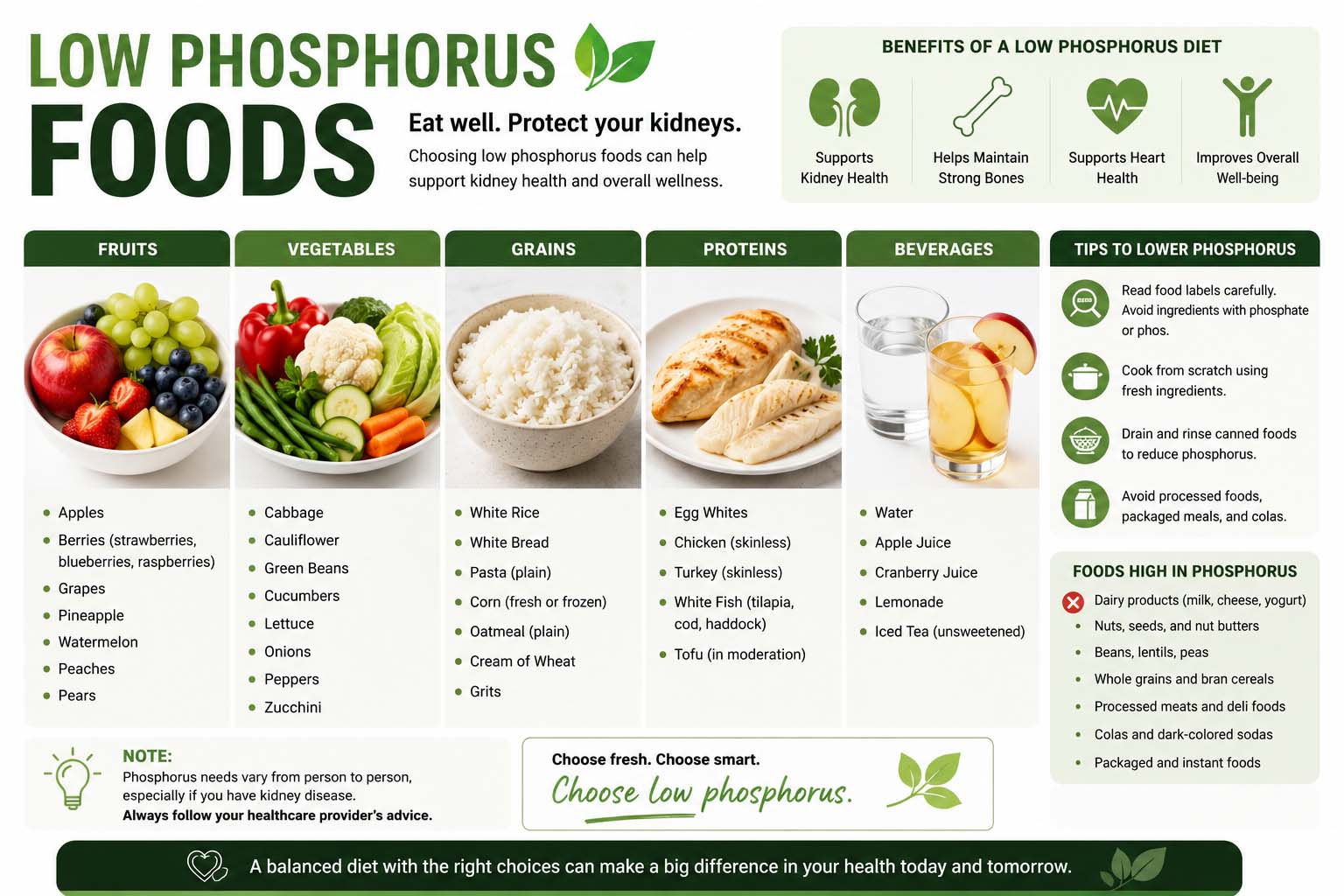
Best Low Phosphorus Foods
Many naturally nutritious foods are relatively low in phosphorus.
Fruits
Most fresh fruits are naturally low in phosphorus.
Good choices include:
- Apples
- Grapes
- Blueberries
- Strawberries
- Peaches
- Pineapple
- Watermelon
- Pears
Fresh fruit also provides vitamins, antioxidants, and hydration.
Vegetables
Many vegetables fit well into a lower-phosphorus meal plan.
Examples include:
- Cabbage
- Cucumbers
- Lettuce
- Bell peppers
- Onions
- Cauliflower
- Green beans
- Zucchini
Some vegetables contain more potassium than others, so people with kidney disease should always follow individualized recommendations.
For example, many people enjoy learning about the health benefits of asparagus, but portion sizes and overall meal planning should still match the advice given by their healthcare team.
Grains
Lower-phosphorus grain choices include:
- White rice
- White bread
- Pasta
- Rice cereal
- Cornflakes
- Tortillas
Whole grains often contain more phosphorus than refined grains. Even so, whole grains may still be appropriate for some people depending on their overall health.
Protein Sources
Lower-phosphorus options may include:
- Egg whites
- Fresh chicken
- Fresh turkey
- Fresh fish in moderate portions
- Lean beef in appropriate serving sizes
Fresh meats generally contain less absorbable phosphorus than processed meats with phosphate additives.
Foods Higher in Phosphorus to Limit
Many healthy foods naturally contain phosphorus.
Examples include:
- Cheese
- Milk
- Yogurt
- Nuts
- Seeds
- Peanut butter
- Organ meats
- Sardines
- Beans
- Lentils
- Bran cereals
- Dark cola drinks
This doesn’t necessarily mean these foods are “bad.” Instead, people with kidney disease may need to eat smaller portions or choose alternatives.
Packaged foods containing phosphate additives often contribute more absorbable phosphorus than naturally occurring sources.
Watch for Hidden Phosphates
One of the biggest challenges is that phosphorus isn’t always obvious.
Read ingredient labels carefully.
Ingredients such as:
- Calcium phosphate
- Sodium phosphate
- Phosphoric acid
- Pyrophosphate
all indicate added phosphorus.
Preparing meals at home using fresh ingredients often helps reduce phosphate additive intake.
Sample Low Phosphorus Foods List
Here’s a quick reference guide.
| Food Group | Better Choices |
|---|---|
| Fruits | Apples, berries, grapes, peaches |
| Vegetables | Cabbage, lettuce, cucumbers, cauliflower |
| Grains | White rice, pasta, white bread |
| Protein | Egg whites, fresh chicken, turkey |
| Snacks | Unsalted popcorn, applesauce, rice cakes |
| Drinks | Water, herbal tea, lemonade (without phosphate additives) |
This list provides a starting point, but your healthcare provider may recommend additional changes based on your individual needs.
Building Balanced Meals
Limiting phosphorus doesn’t mean sacrificing good nutrition.
A balanced meal might include:
- Grilled chicken
- White rice
- Steamed green beans
- Fresh apple slices
- Water or unsweetened tea
This combination supplies protein, carbohydrates, fiber, vitamins, and minerals while keeping phosphorus relatively moderate.
If your digestive system is sensitive after illness or surgery, your provider may temporarily recommend full liquid diet foods before gradually returning to solid meals.
Getting Enough Fiber
Fortunately, there are still many ways to eat fiber while following phosphorus guidelines.
Depending on your medical condition, fruits, vegetables, and selected grains can contribute to healthy digestion.
Our guide to foods high in fiber explains additional ways to increase fiber while balancing other dietary restrictions.
Always discuss major dietary adjustments with your healthcare provider if you have kidney disease.
Should You Avoid All Dairy?
Not necessarily.
Dairy products naturally contain phosphorus, yet they also provide calcium and protein.
Some people need to reduce dairy portions, while others may continue eating moderate amounts based on blood test results.
A registered dietitian can recommend appropriate serving sizes for your individual health needs.
Meal Planning Tips
Following a lower-phosphorus diet becomes easier with a little preparation.
Try these ideas:
- Cook more meals at home.
- Choose fresh meat instead of processed meat.
- Read food labels for phosphate additives.
- Fill half your plate with suitable vegetables.
- Keep fresh fruit available for snacks.
- Drink water throughout the day unless you’ve been given fluid restrictions.
- Plan meals before grocery shopping.
Small changes often make the diet easier to maintain over time.
What About Juices?
Fruit juices can fit into some meal plans, although whole fruit usually provides more fiber.
Freshly prepared juices may contain fewer additives than some packaged beverages.
If you’re interested in learning more, our article about the benefits of juicing explains both the advantages and the limitations of juice compared with whole fruits and vegetables.
Low Phosphorus Foods for Dogs
Some pet owners also search for low phosphorus foods for dogs or low phosphorus dog foods.
Dogs with chronic kidney disease often benefit from specially formulated veterinary diets that help manage phosphorus levels while providing balanced nutrition.
Avoid creating homemade low-phosphorus diets for your dog without veterinary guidance. Dogs have different nutritional requirements than humans, and an unbalanced diet may cause deficiencies.
If your pet has kidney disease, your veterinarian can recommend the most appropriate commercial food or a professionally formulated homemade plan.
Common Myths About Low-Phosphorus Diets
Myth 1: All Healthy Foods Are Low in Phosphorus
Many nutritious foods, including dairy products, beans, and nuts, naturally contain phosphorus.
The goal is balance, not eliminating healthy foods without a medical reason.
Myth 2: You Should Stop Eating Protein
Protein remains essential for maintaining muscle and supporting overall health.
Your healthcare provider will help determine the right amount based on your kidney function and nutritional needs.
Myth 3: Labels Always Show Phosphorus Content
Many food labels don’t list phosphorus amounts.
Instead, check ingredient lists for phosphate-containing additives.
Frequently Asked Questions
Are eggs low in phosphorus?
Egg whites are relatively low in phosphorus, while egg yolks contain more. Some people with kidney disease choose egg whites more often, depending on their dietary plan.
Is chicken allowed on a low-phosphorus diet?
Fresh chicken can often fit into a lower-phosphorus eating plan when eaten in recommended portions. Processed chicken products may contain added phosphates.
Can I eat fruit every day?
Most fresh fruits are naturally low in phosphorus and can be included regularly unless you’ve been given other dietary restrictions.
Are whole grains always better?
Whole grains provide valuable nutrients, but they also contain more phosphorus than refined grains. Your healthcare provider or dietitian can help determine which option is best for your situation.
Do I need phosphorus binders?
Some people with advanced kidney disease are prescribed phosphate binders to take with meals. Only use these medications if they are prescribed by your healthcare provider.
Key Takeaways
Low phosphorus foods can play an important role in managing chronic kidney disease and high blood phosphorus levels. Fresh fruits, many vegetables, white rice, pasta, egg whites, and fresh meats are often good choices, while processed foods with phosphate additives, large amounts of dairy, nuts, seeds, and certain packaged foods may need to be limited.
The best eating plan is one that’s tailored to your health needs. If you’ve been advised to reduce phosphorus, work closely with your healthcare provider or a registered dietitian. They can help you build balanced meals that support both your nutritional needs and your long-term kidney health.